
LEARN
What Are The Symptoms of Prostate Cancer?
During the early stages of prostate cancer, there are often no symptoms. That is why screenings and yearly check-ups matter so much: they can catch cancer early, before it spreads outside the prostate. You may feel completely fine and still learn you have prostate cancer from a routine visit that includes a PSA blood test and a physical exam of the prostate.
Most prostate cancer is found through screening tests, most commonly a Prostate Specific Antigen (PSA) test and a Digital Rectal Exam (DRE).
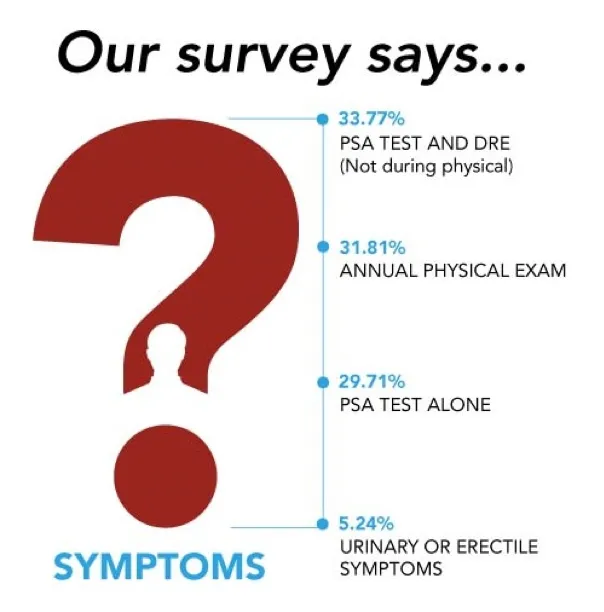
In a recent NPCA survey, we asked men how they learned they had prostate cancer. Only 5.24% learned because of urinary or erectile symptoms. The overwhelming majority (94%) learned from early detection through a screening test.

Symptoms That Can Overlap With Other Conditions
Common urinary and sexual signs
Many prostate cancer symptoms look a lot like benign prostatic hyperplasia (BPH), prostatitis, erectile dysfunction, or overactive bladder. These can include:
- Strong urge to urinate immediately
- Frequent nighttime urination
- Pain and/or burning when urinating
- Difficulty starting the urinary stream
- A weak urinary stream once it starts
- Dribbling after you are finished
- Pain in the genital and pelvic area
- Pain when ejaculating
- Blood in the urine or semen
- Frequent urinary tract infections
Feeling any of these does not mean you have prostate cancer. It does mean it is worth talking with your doctor, especially if symptoms are new, worsening, or interrupting sleep and daily life.
More Serious Signs to Take Seriously
Less common, take seriously
Other, more serious symptoms may include:
- Unexpected weight loss
- Pain in the lower back or pelvic area
- Anemia
- Fatigue
These signs can have many causes. Do not wait and wonder. Call your doctor and ask whether prostate cancer screening (or follow-up testing) is right for you.
Why Annual Check-Ups Matter
It is easy to mistake prostate cancer for BPH, prostatitis, or overactive bladder. Annual check-ups matter even more when you have any of the symptoms above, and they still matter when you feel fine. Early prostate cancer often announces itself only through a screening result, not through pain or urgency.
If you are unsure when to start testing, read our guide on when men should get tested, learn how prostate cancer is diagnosed, or talk with your doctor about your personal risk.
Get a Free PSA Test in Nebraska
A PSA blood test is a simple first step in screening, and the Nebraska Prostate Cancer Alliance offers it free to men 40 and older at Cruisin’ for a Cure and community events across Nebraska. No insurance required. Results stay private. Early detection saves lives.
Keep Learning
Explore related topics: your risk factors, how prostate cancer is diagnosed, when to get tested, and resources if you or someone you love was just diagnosed.