
LEARN
About Prostate Cancer
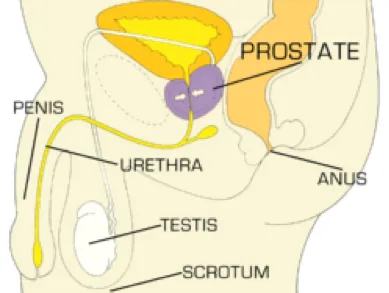
Prostate cancer is cancer that starts in the prostate, a small, walnut-shaped gland in the male reproductive system. It’s the most commonly diagnosed cancer in men after skin cancer, and when it’s caught early, it can usually be treated successfully. In fact, nearly 100% of men diagnosed with prostate cancer today are alive five years later. Whether and when to test is a personal decision best made with your doctor, and we’re here to make that testing free and easy.

Pussycat or Tiger? Not All Prostate Cancer Is the Same
In many cases prostate cancer stays confined to the prostate and grows so slowly it may never pose a serious threat to your overall health. Other cases are aggressive and can spread quickly to other organs or bones. Your treatment decisions depend largely on which kind you have and how aggressive it is, which you’ll learn from the stage and grade of your cancer.
A simple question to ask your doctor: is my prostate cancer a “pussycat” or a “tiger”?
- A “pussycat” means a very low risk of the disease spreading beyond your prostate any time soon.
- A “tiger” means a high risk of aggressive disease that could spread beyond your prostate.
Wondering where you stand? Start by learning the symptoms, whether you’re at risk, and when to get tested.
Understanding How Prostate Cancer Works
Cancer begins in cells, the building blocks that make up every tissue and organ, including the prostate. Normally cells grow, divide, and die on a regular schedule. Sometimes that process breaks down and cells don’t die when they should, creating a growth or tumor. Tumors can be benign (not cancerous) or malignant (cancerous).
Prostate cancer can spread from the prostate to the bones, other organs, and the lymph system. When that happens it’s called metastatic prostate cancer. Important: if prostate cancer spreads to the bone, you have prostate cancer cells in the bone, not bone cancer.
How Prostate Cancer Is Diagnosed and Graded
Prostate cancer can only be diagnosed with a tissue sample, obtained through a biopsy. Once you’re diagnosed, you’ll learn more about your disease state, including your Gleason score (the grade, which indicates how aggressive the disease is) and your stage (which indicates where the cancer cells are in your body). Together, these help you and your doctor build the best treatment plan for you.
Just Diagnosed? Start Here
If you or someone you love was just diagnosed, take a breath. Your next step is to learn as much as you can about your diagnosis and work with your doctor on a plan. Our resources for the newly diagnosed walk you through the tools and questions that help you do exactly that.
Get a Free PSA Test in Nebraska
Testing for prostate cancer starts with a simple PSA blood test, and the Nebraska Prostate Cancer Alliance offers it free to men 40 and older at Cruisin’ for a Cure and community events across Nebraska. No insurance required, results kept private. Early detection saves lives.